
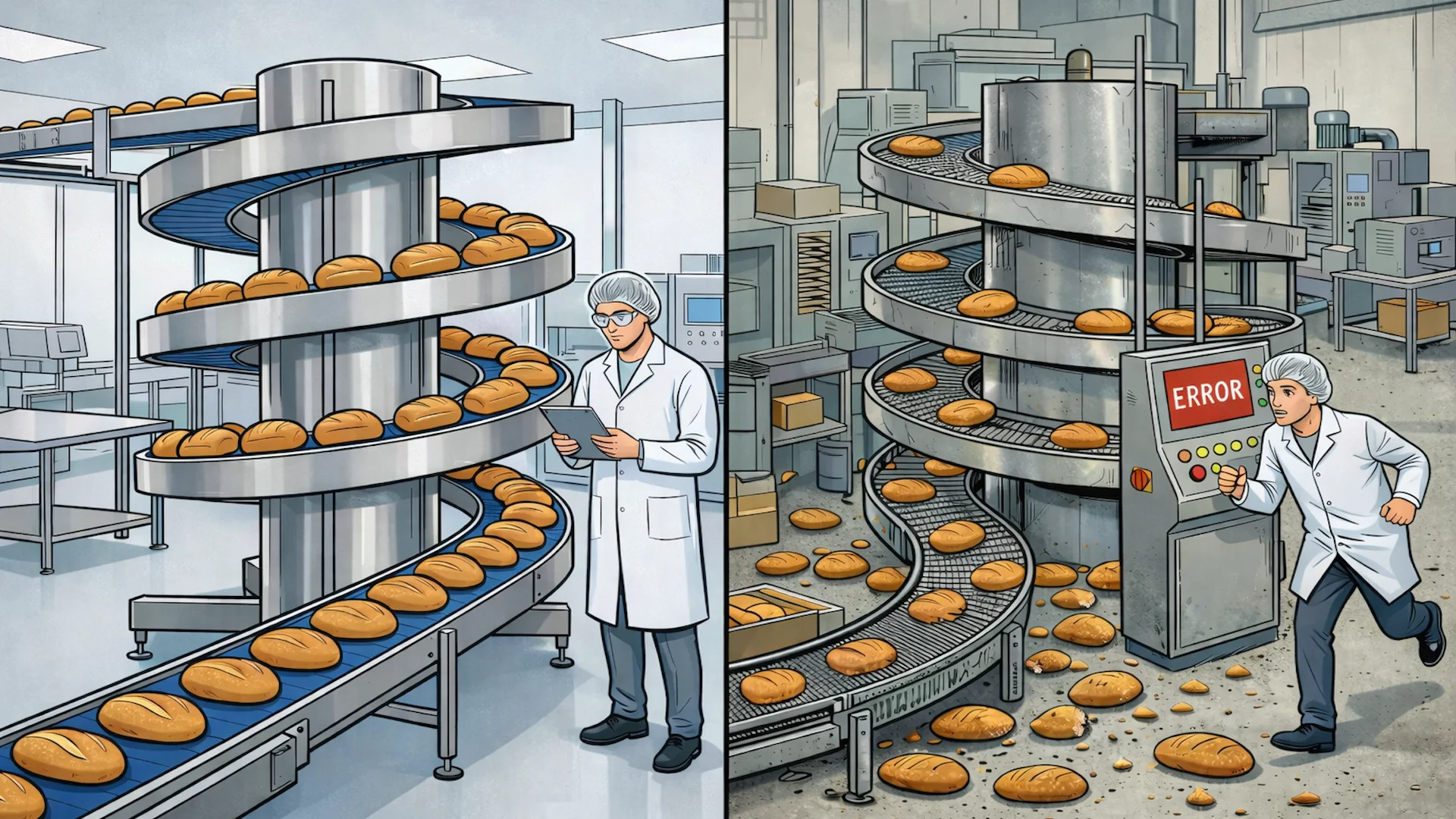
When evaluating a spiral freezer or cooler, the purchase price is an important factor, but it is not enough to properly compare proposals. The decision will also affect production capacity, resource consumption, maintenance, hygiene, and operational continuity for many years.
That is why it is essential to assess the total cost of ownership (TCO): how much it costs to process each kilogram or metric ton over the equipment’s entire service life. From this perspective, Intralox DirectDrive technology is designed to reduce risk, simplify operation, and deliver predictable performance.
1. Technology and Reliability: Protecting Operational Continuity
In many plants, the spiral system is a critical point in the production line. A shutdown can stop both upstream and downstream processes, so reliability is far from a minor detail.
The main differences include:
- DirectDrive system: the positive-drive system reduces belt overdrive, misalignment, and unnecessary stress on the belt.
- Fewer critical components: simplifies the drive system and reduces potential points of failure.
- Stable, repeatable operation: helps maintain consistent process conditions from shift to shift.
The comparison should not be limited to whether two systems meet the same rated capacity. It is also important to consider how they maintain that capacity under actual operating conditions and the likelihood that a failure could stop the production line.
2. Capacity, Efficiency, and the True Operating Cost
A lower-priced system may ultimately be more expensive if it requires additional production hours, consumes more resources, or needs frequent service. The meaningful metric is not only the initial investment, but the cost per kilogram or metric ton processed.
- Actual capacity: the throughput achievable with the actual product and process, not only under theoretical conditions.
- Resource consumption: energy, refrigeration, water, cleaning, and operating time.
- Service life and planned maintenance: fewer replacements, scheduled shutdowns, and less reliance on emergency interventions.
An initial price difference can quickly be offset by unproductive hours, additional resource consumption, or spare parts. The right question is: How much will it cost to operate this equipment for 5, 10, or more years?
3. Unplanned Downtime: The Cost Not Shown in the Quotation
Every hour of unplanned downtime has a real cost that can far exceed the cost of the repair itself.
A shutdown may involve:
- Lost production and idle personnel.
- Lost or reprocessed product, depending on the stage of the process.
- Rescheduling and missed commitments affecting other departments and customers.
- Spare parts, technical support, and collateral damage to the belt, structure, or other components.
The impact varies depending on the plant, the product, and the duration of the shutdown, but it is rarely insignificant.
No technology can guarantee zero downtime. The goal of a robust, properly maintained design is to reduce the frequency of shutdowns, limit their consequences, and enable a faster recovery. With critical equipment, this reduction in risk has measurable economic value.
4. Hygiene, Cleaning, and Process Safety
Sanitary design affects both food safety and the amount of time available for production:
- Open, accessible design: makes inspection easier and reduces hard-to-reach areas.
- Fewer accumulation points and lubrication requirements: lowers contamination risks and avoids unnecessary sanitation work.
- Faster, repeatable cleaning: reduces variability between shifts and frees up more time for production.
A spiral system that can be cleaned and inspected consistently helps meet quality standards, simplifies audits, and reduces microbiological risk.
5. Local Support: Assistance Throughout the Equipment’s Service Life
Technology must also be backed by an answer to a decisive question: Who will respond when the equipment requires adjustments, spare parts, or technical assistance?
- Direct technical communication: the same language, the same time zone, and fewer opportunities for misunderstandings.
- Factory visits and Factory Acceptance Tests (FAT): allow the equipment to be inspected before shipment and key project details to be validated.
- Shorter response times: questions or problems can be addressed in hours or days rather than weeks.
- Nearby technical service: makes on-site assistance easier and helps keep travel expenses under control.
- Spare parts and logistics: shorter distances, more predictable lead times, and less capital tied up.
When support is needed, distance is no longer simply a geographical consideration; it becomes a direct cost and an operational risk.
6. How to Compare Proposals Properly
Before making a decision, ask each supplier to explain and support the following points with comparable data.
Pay particular attention to:
- Guaranteed capacity for the actual product and operating conditions.
- Drive technology, critical components, and expected service life.
- Resource consumption and operating cost per kilogram or metric ton processed.
- Preventive maintenance plan and the cost and availability of spare parts: expected requirements throughout the equipment’s service life and estimated service times.
- Hygienic design, safety, and the time required for cleaning and inspection.
- Technical support, response time, and long-term service availability.
The purchase price is paid once; the costs of operating, cleaning, maintaining, and stopping the production line accumulate every day. The best decision is not necessarily to choose the least expensive spiral system, but the one that offers the lowest total cost of ownership and an appropriate level of risk for the plant. Comparing proposals using these criteria makes it possible to invest based on data, rather than solely on the initial price.